Does Geranium Oil Go Bad? How to Tell When It Has Turned
Most of us have found one: a small bottle pushed to the back of a drawer, bought for a project that never happened. Geranium oil is forgiving about being forgotten, but it is not unchanging. The honest answer to "does it go bad?" is that it drifts, slowly, and what matters is knowing how to spot the drift before the oil goes anywhere near your skin.
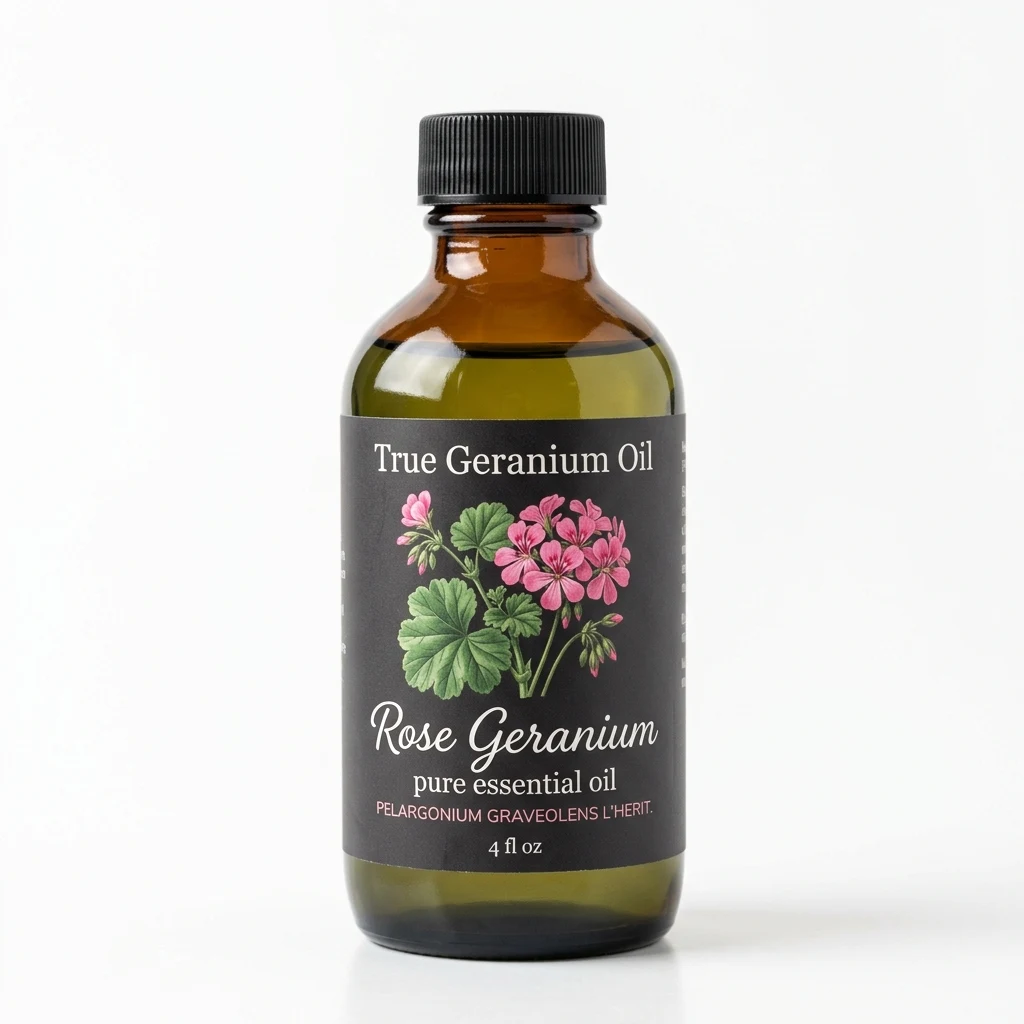
Rose Geranium Essential Oil
Our own Rose Geranium Essential Oil, in sizes from 0.5 oz to bulk.
From $24.99
Shop Now →What "bad" actually means for an essential oil
Geranium oil does not rot or grow mould the way food does. What happens is oxidation: oxygen slowly reacts with the oil's aroma molecules. The Tisserand Institute describes oxidation as the main way essential oils degrade, says most oils keep well for at least one to two years before it starts to take effect, and notes that the products it forms tend to raise the risk of skin reactions (Tisserand Institute). We say both of our geranium oils typically last two to three years when kept tightly capped in a cool, dark place away from heat and light, which sits comfortably beside that.
Geranium is a good example of why this is worth a few minutes of attention, because its rosy character rests on geraniol and citronellol, two alcohols that react with air. In a laboratory study, geraniol left exposed to air formed several new compounds, including the citral isomers geranial and neral, and the aged samples were a moderate skin sensitiser in mice where fresh geraniol was weak (Hagvall et al., 2007). A later clinical study patch-tested about 2,200 dermatitis patients with fresh geraniol and about 2,200 with air-oxidised geraniol at 2% in petrolatum. Positive reactions rose from 0.13% to 0.55% (Hagvall, Karlberg and Christensson, 2012). Those were isolated compounds, not whole geranium oil, so read them as a reason for care and not as a prediction about any one bottle.
Reading an older bottle
No single sign is a verdict, so look at several together.
- Smell. Fresh geranium has a rose heart wrapped in green leaf, with minty and citrusy edges. A tired bottle tends to lose that brightness first: the rose goes flat or sharp, and the green turns stale. If you would not enjoy the smell in a room, that is information.
- Thickness. Very old essential oils can thicken and eventually turn gummy, though the Tisserand Institute notes this takes years. A drop that runs more slowly than you remember, or leaves a tacky film on the neck of the bottle or inside the cap, points the same way.
- Cloudiness or water. Clear oil that has gone hazy, or shows tiny droplets, suggests moisture has got in. Refilling a small bottle from a damp dropper is one common route.
- Colour. This one is a weak signal. The batch on the Certificate of Analysis we publish is described as a yellow liquid, and a pale-to-deeper yellow range is normal for the oil, so a slight shade change on its own tells you little.
Notice that a good nose test is not a clean bill of health. Oxidation can begin before the smell has moved much, which is why the date matters as much as the sniff. Write the day you open each bottle on a strip of tape or a note, and you will never have to guess its age again.
What to do with an oil that has turned
Here is where we land. If the oil is within the typical two to three years, has been kept capped and cool, and still smells like geranium, carry on as normal with your usual dilution and a patch test, as described in our patch test routine. If it is well past that age, smells off, has thickened or has clouded, retire it from anything that touches skin, and especially from leave-on products for the face. Oxidised terpenes are the concern, and a new bottle costs far less than a reaction.
An older oil can still have a modest second life where it is only being smelled, as a room scent or a scent to freshen a drawer, provided you still like how it smells. When you are done with it, ask your local waste service how it prefers small amounts of concentrated oil to be handled, rather than pouring it down a drain.
Slowing the drift
The habits are simple and covered in more detail in how to store geranium oil: cap it straight away, keep it away from heat and sun, and move leftovers into a smaller bottle so there is less air above the oil. The Tisserand Institute says refrigeration roughly doubles useful life, which makes sense for a bottle you will use over several years. Buying the size you will really use also helps; our size guide works through the arithmetic.
A bottle of geranium oil rewards a little attention, and a date on the label is the smallest, cheapest habit of all. If you keep it capped, cool and dated, it should smell like roses on leaves for a good while.
Rose Geranium Essential Oil
Rose Geranium Essential Oil from our own shop, in sizes from 0.5 oz to bulk.
From $24.99
Shop Now →Sources & Further Reading
- Is my bottle of essential oil oxidized or no longer good to use? (Tisserand Institute)
- Fragrance compound geraniol forms contact allergens on air exposure. Identification and quantification of oxidation products and effect on skin sensitization. (Hagvall et al., Chemical Research in Toxicology, 2007)
- Contact allergy to air-exposed geraniol: clinical observations and report of 14 cases. (Hagvall, Karlberg and Christensson, Contact Dermatitis, 2012)