
Rose Geranium Oil and Ticks: What the Outdoor Claims Really Say
Search for "rose geranium oil for ticks" and you will find a world of confident promises. Blog posts declare it a must-have for hikers. Social media threads swear by homemade rose geranium tick spray. And somewhere in the middle, a handful of actual studies sit quietly, telling a more complicated story.
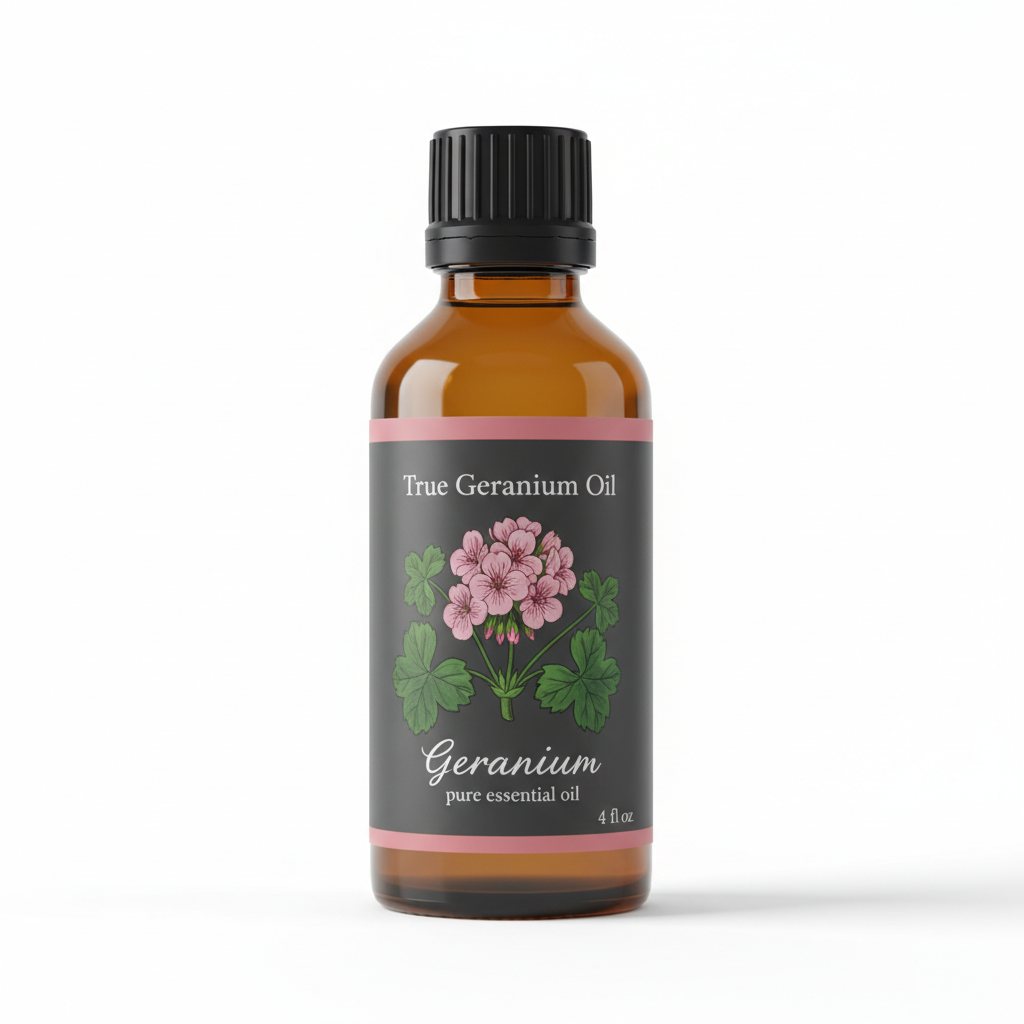
Geranium Essential Oil
Our own Geranium Essential Oil, in sizes from 0.5 oz to bulk.
From $15.99
Shop Now →This article works through the most common claims one by one. For each one, we look at what the evidence actually says, where the idea came from, and what a realistic picture looks like for anyone spending time outdoors near wooded or grassy areas.
A Quick Note on the Plant Itself
Before the myths, a small but important clarification. "Rose geranium oil" refers to Pelargonium graveolens or the closely related Pelargonium roseum, both members of the Pelargonium genus. These are not true roses, and they are not the wild geraniums (Geranium genus) that grow in meadows. The name comes from the oil's distinctly rosy, green-floral scent.
The oil is steam-distilled primarily from the leaves and stems. Its main naturally occurring compounds include citronellol, geraniol, and linalool. Geraniol, in particular, is the compound that appears most frequently in the outdoor-use conversation, and that detail matters a great deal as we work through the claims below. For a broader look at how this oil is used day to day, the complete guide to geranium oil uses covers its cosmetic and household roles in full.
Myth 1: "Rose Geranium Oil Is a Proven Tick Repellent"
The Claim
You will often see rose geranium oil described as a scientifically proven tick repellent, sometimes placed in the same sentence as DEET and commercial products.
What the Evidence Actually Says
The research picture is genuinely mixed, and "proven" is a strong word that the available studies do not fully support.
Some research suggests that geraniol, one of the naturally occurring compounds in rose geranium oil, shows repellent activity against certain tick species in laboratory settings. A study published in the journal Experimental and Applied Acarology examined essential oils against Ixodes scapularis (the black-legged tick common in North America) and found that geraniol-containing oils showed measurable repellent effects in controlled conditions. Several additional laboratory studies have observed similar activity against Rhipicephalus and Amblyomma species.
The key phrase is "in laboratory settings." Controlled lab conditions are not the same as a humid trail at dusk with wind, perspiration, and clothing interference. Evidence from field studies, meaning real-world outdoor tests on human subjects, is considerably thinner. The few field trials that do exist tend to show shorter duration of effect compared with synthetic alternatives, and some show significant variability between individuals.
Why the Myth Exists
The lab findings are real. They have been widely reported, often without the accompanying caveats about conditions and duration. When people read "geraniol repels ticks in studies," they reasonably translate that into "geranium oil is a proven repellent." The translation is understandable but not quite accurate.
Myth 2: "A Rose Geranium Tick Spray Works as Well as DEET"

The Claim
Recipes for rose geranium tick spray circulate widely, often with the suggestion that they perform comparably to conventional repellents.
What the Evidence Actually Says
The comparative data does not support equivalence. Studies that have directly compared geraniol-based preparations with DEET or permethrin consistently find that the conventional options outperform plant-derived alternatives in both duration and consistency of protection.
A 2011 study in the Journal of Medical Entomology tested a range of plant-based repellents against black-legged ticks and found that while some botanical preparations did show initial repellent activity, their effective window was substantially shorter than that of synthetic options. Protection times measured in hours for botanical products compared with protection times measured across a full day or longer for DEET at standard concentrations.
Duration matters for outdoor exposure. A spray that loses its effect after an hour in a four-hour hike is a fundamentally different product from one that remains active throughout.
Why the Myth Exists
Concerns about synthetic chemicals, particularly DEET, drive the search for alternatives. That is a completely understandable motivation. The desire for a natural option can lead to a kind of confirmation bias, where evidence of any activity gets interpreted as evidence of equivalent activity. Those are not the same thing.
Myth 3: "Putting Rose Geranium Oil Directly on Your Pet Will Keep Ticks Off"
The Claim
This claim appears frequently in pet-focused wellness spaces. The suggestion is that applying neat (undiluted) rose geranium oil to a dog's collar or coat will deter ticks.
What the Evidence Actually Says
The evidence for efficacy in this specific application is limited, and the safety concern here is more pressing than the efficacy question.
Cats are particularly sensitive to many essential oil compounds, including geraniol and citronellol. Even in dogs, undiluted application creates a real risk of skin irritation. The olfactory sensitivity of dogs is orders of magnitude greater than that of humans, and strong botanical oils applied directly to the coat can cause visible distress.
Any application to animals should involve consultation with a veterinarian before use. This is not a precautionary boilerplate. It is genuinely important, because the dosing considerations for companion animals are not equivalent to those for humans.
Why the Myth Exists
Rose geranium oil has a long folk history of outdoor use with dogs. Anecdotal reports from pet owners circulate continuously. Some pet owners do report positive experiences, but anecdotal patterns are not the same as controlled evidence, and the safety variable is too significant to set aside.
Myth 4: "Natural Means Safe, So You Can Use as Much as You Like"

The Claim
This is less a specific tick-related myth and more an overarching assumption that shapes how people approach DIY rose geranium tick spray recipes. The logic runs: it is natural, therefore it is harmless.
What the Evidence Actually Says
Natural origin does not determine safety profile. Rose geranium oil is a potent concentrated extract. Undiluted application to human skin can cause irritation and sensitization in some individuals. Citronellol and geraniol, both present in the oil, are recognized contact sensitizers. The International Fragrance Association has flagged geraniol as a potential allergen at higher concentrations.
For any topical application, including a homemade spray, proper dilution is essential. A general guideline from aromatherapy practice places body-application blends at 1 to 2 percent essential oil in a carrier, which translates to roughly 6 to 12 drops of essential oil per ounce of carrier. Applications to the face should be lower, and applications near the eyes should be avoided entirely.
Patch testing before first use is also worth doing. Apply the diluted blend to a small area of the inner arm, wait 24 hours, and check for any reaction before wider use.
Why the Myth Exists
The natural-equals-safe assumption is culturally persistent. It is reinforced by marketing language and by the genuinely gentle sensory experience of well-diluted rose geranium oil, which smells pleasant and feels mild. Mild sensory experience and mild physiological impact are not always the same thing.
Myth 5: "Rose Geranium Oil Is the Same as Citronella for Outdoor Use"
The Claim
Because both are described as natural options for outdoor situations, they are sometimes treated as interchangeable or as being in the same evidence category.
What the Evidence Actually Says
Citronella (Cymbopogon nardus or Cymbopogon winterianus) and rose geranium are different plants with different chemical profiles and different evidence bases. Citronella has a somewhat longer history of study specifically as a mosquito repellent, and the EPA has registered citronella oil as an active ingredient in certain repellent products. Rose geranium oil does not currently hold that registration status.
The two oils do share some overlapping compounds. Both contain citronellol, for example. But the overall composition, the ratio of active compounds, and the evidence supporting their respective uses are distinct. Treating them as equivalent simplifies past the point of usefulness.
Why the Myth Exists
Both oils are marketed toward similar outdoor and natural-lifestyle audiences. They often appear together in the same product lines and the same online conversations. Proximity in marketing creates an impression of equivalence that the evidence does not fully justify.
What the Outdoor Research Actually Supports (So Far)

Stripped of the overstatements, here is a fair summary of where the research currently stands on geranium oil for ticks:
- Laboratory evidence suggests that geraniol, a key compound in rose geranium oil, shows repellent activity against several tick species in controlled conditions.
- Field evidence is limited. Real-world effectiveness is harder to confirm than lab-condition activity, and duration of effect appears shorter than synthetic alternatives in the studies that have compared them.
- Rose geranium oil is not registered by the EPA as a tick repellent. For high-risk outdoor exposure, current public health guidance from organizations like the CDC points toward EPA-registered repellents.
- Dilution and patch testing are always required for topical application. "Natural" does not mean "apply freely."
- Animal use requires veterinary guidance. Do not apply to cats. Approach dog application cautiously and with professional input.
Where Rose Geranium Oil Does Shine
None of the above means rose geranium oil lacks value. It has a genuinely lovely role to play in fragrance, skincare, and home routines. The scent is complex and grounding: rosy, slightly green, with a soft citrus undertone that makes it one of the most versatile florals in botanical perfumery.
For skin-focused uses, including its role in balancing complexion-care routines, the notes on geranium oil for skin explore that territory in detail. And for those interested in its use in scalp massage and hair care rituals, the guide to geranium oil for hair covers technique and dilution guidance.
The oil earns its place in a well-curated collection. It just earns it for what it is, not for what the more ambitious claims suggest.
Making an Informed Choice for Outdoor Use
If you spend time in high-exposure outdoor environments and you are weighing your options, the honest position is this: rose geranium oil is an interesting botanical with early-stage research suggesting it may have some repellent properties. It is not a substitute for evidence-based protection in high-risk settings.
A reasonable approach might involve using conventional protection in high-exposure conditions and enjoying rose geranium oil in the contexts where it is genuinely well-suited: the scent of a well-made linen spray, the texture of a careful skin blend, the ritual of a post-outdoor shower with a few drops in a body oil. Those are real pleasures, and they are not diminished by honest thinking about what the outdoor evidence actually says.
If you have specific concerns about outdoor exposure and protection, a conversation with your healthcare provider is the right starting point. They can give guidance that accounts for your specific situation and location.